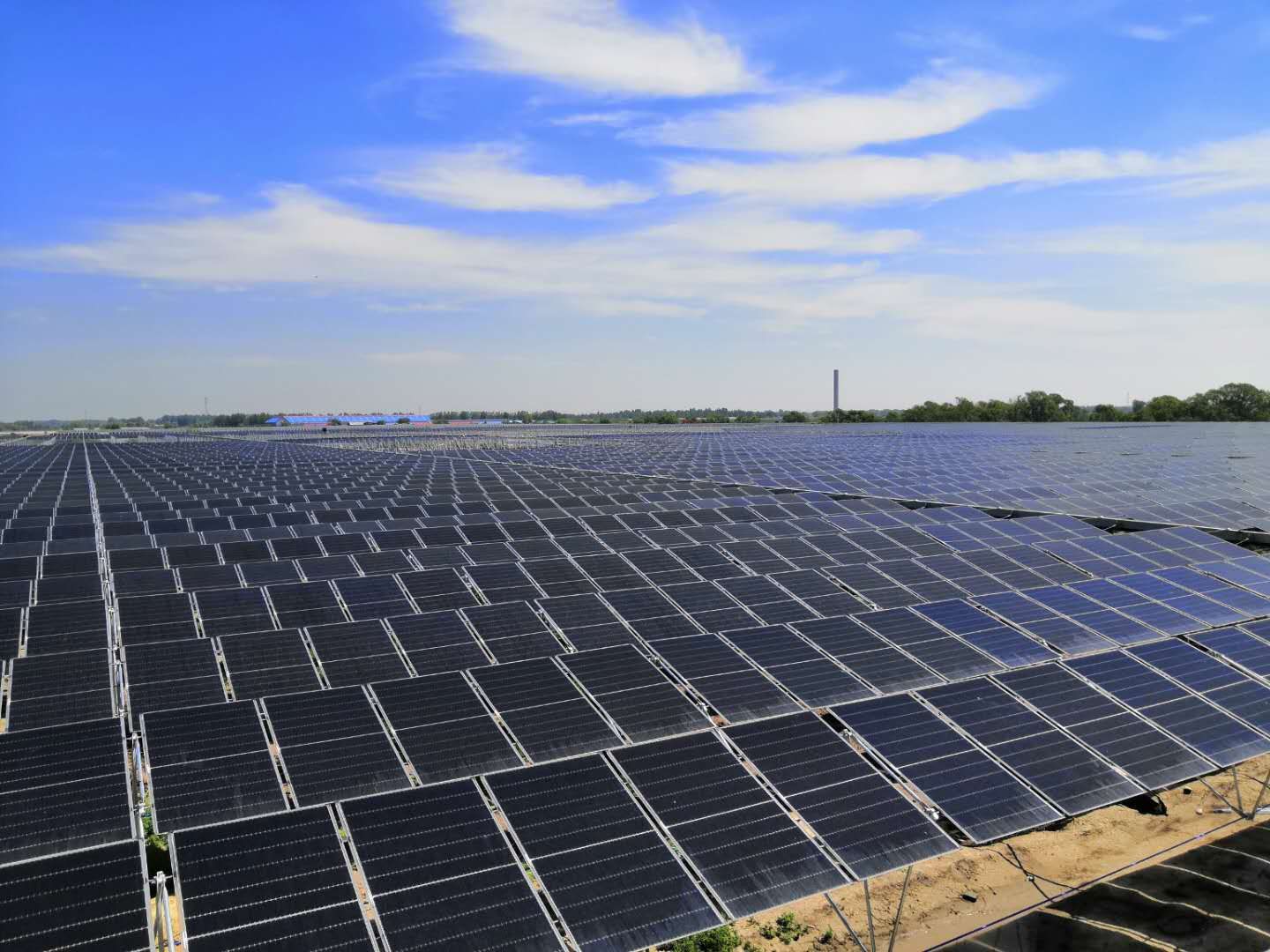
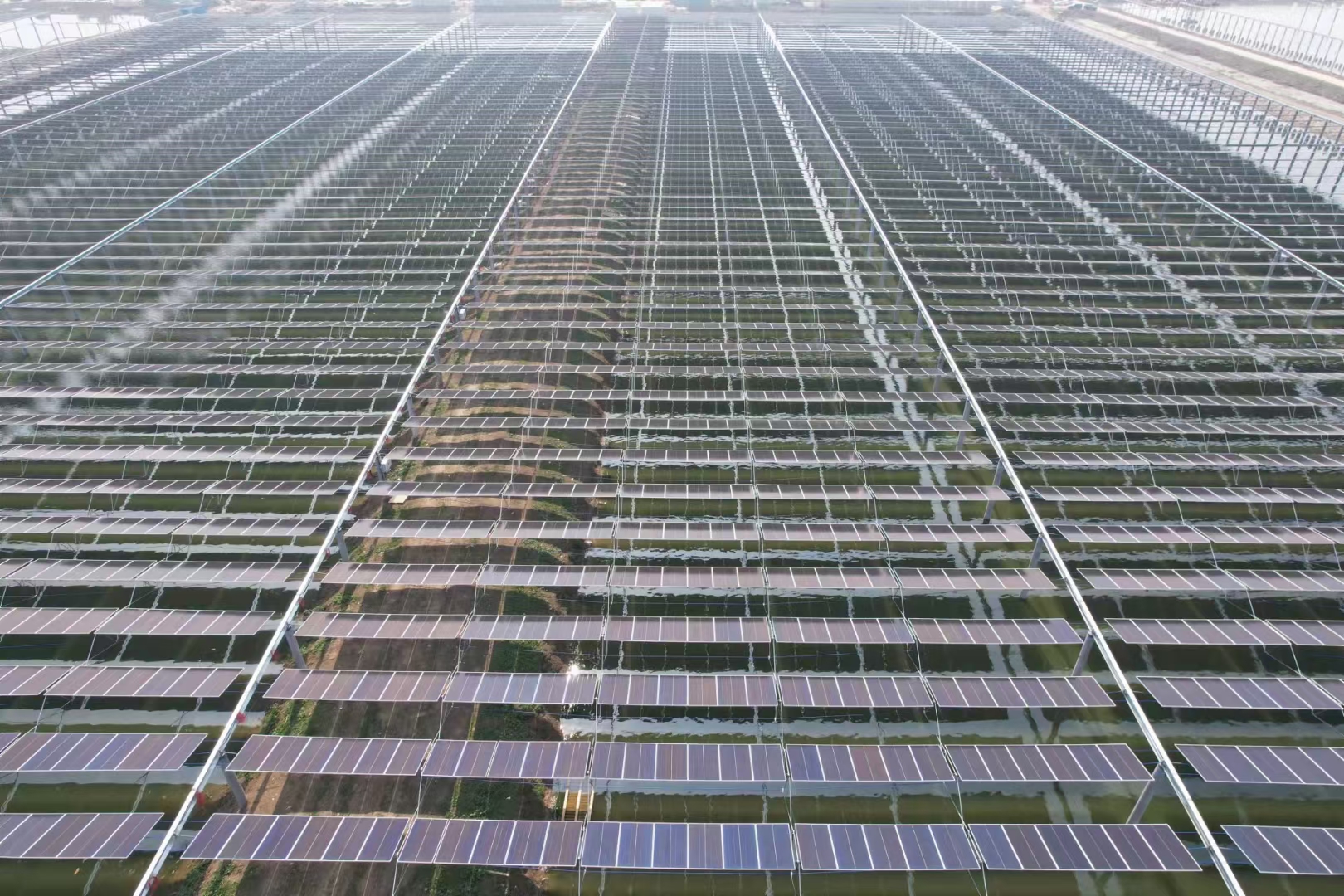
In recent years, more and more people have been installing solar mounting systems. Rows of solar panels look quite neat on rooftops and in open spaces. However, many people are only concerned with how much each solar panel costs or how thick the mounting brackets are; few ask about how grounding is done.
In fact, grounding is something you can’t see or touch in everyday life, but if something goes wrong, it can be a major issue.
What is grounding for?
Simply put, grounding provides a “safe path” for electrical current.
Solar systems are installed outdoors, exposed to wind, rain, and sunlight. Over time, wiring can age, insulation can deteriorate, or lightning strikes can cause current to flow where it shouldn’t—such as along the mounting brackets or the frames of the solar panels. If someone touches these components at that moment, an accident is likely to occur.
The purpose of grounding is to channel this “stray” current through a conductor into the ground, protecting both equipment and people.
Many people try to cut corners here
If you’ve been in the solar industry for a while, you’ll notice that some installation teams cut corners on grounding components to save costs.
Where copper terminals should be used, they just wrap the wire around it a couple of times and call it a day; where grounding screws are required, they skip them entirely; where a jumper wire is required, they assume “since they’re touching, they should conduct electricity” and skip it altogether.
These are all potential hazards.
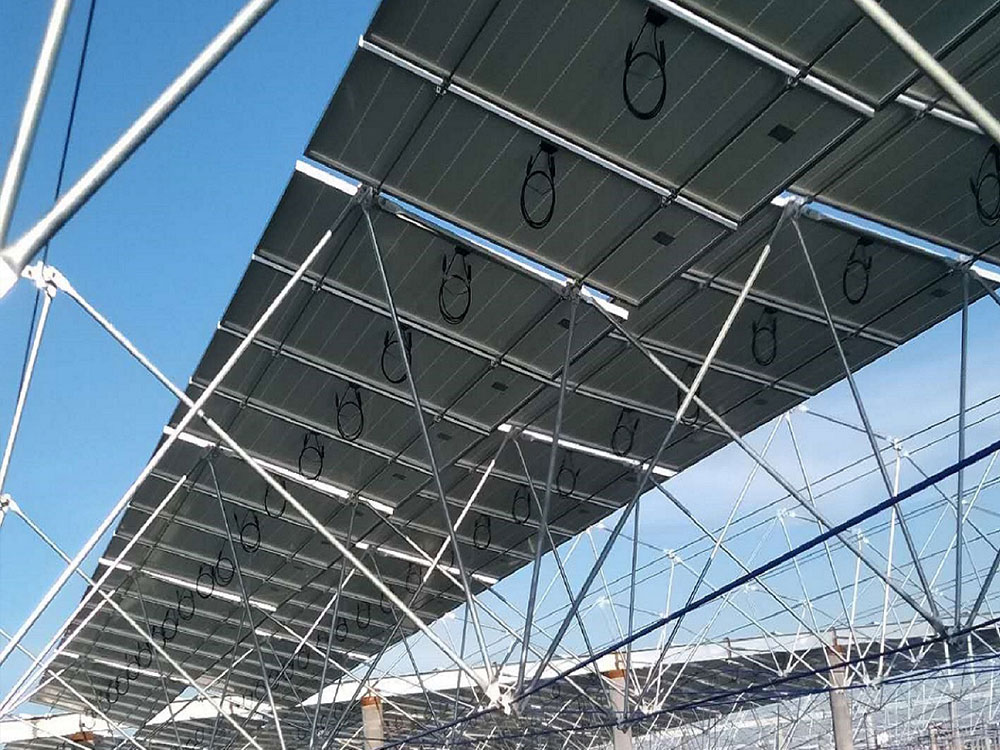
Solar mounting racks are connected section by section, and solar panels are arranged in rows. If there is no reliable electrical connection between each section, one section of the rack may become energized while the next remains unaware. If a person stands in the middle and touches them, the current will pass right through their body.
Small parts, big impact
Grounding components may seem unremarkable, but you can’t do without a single one.
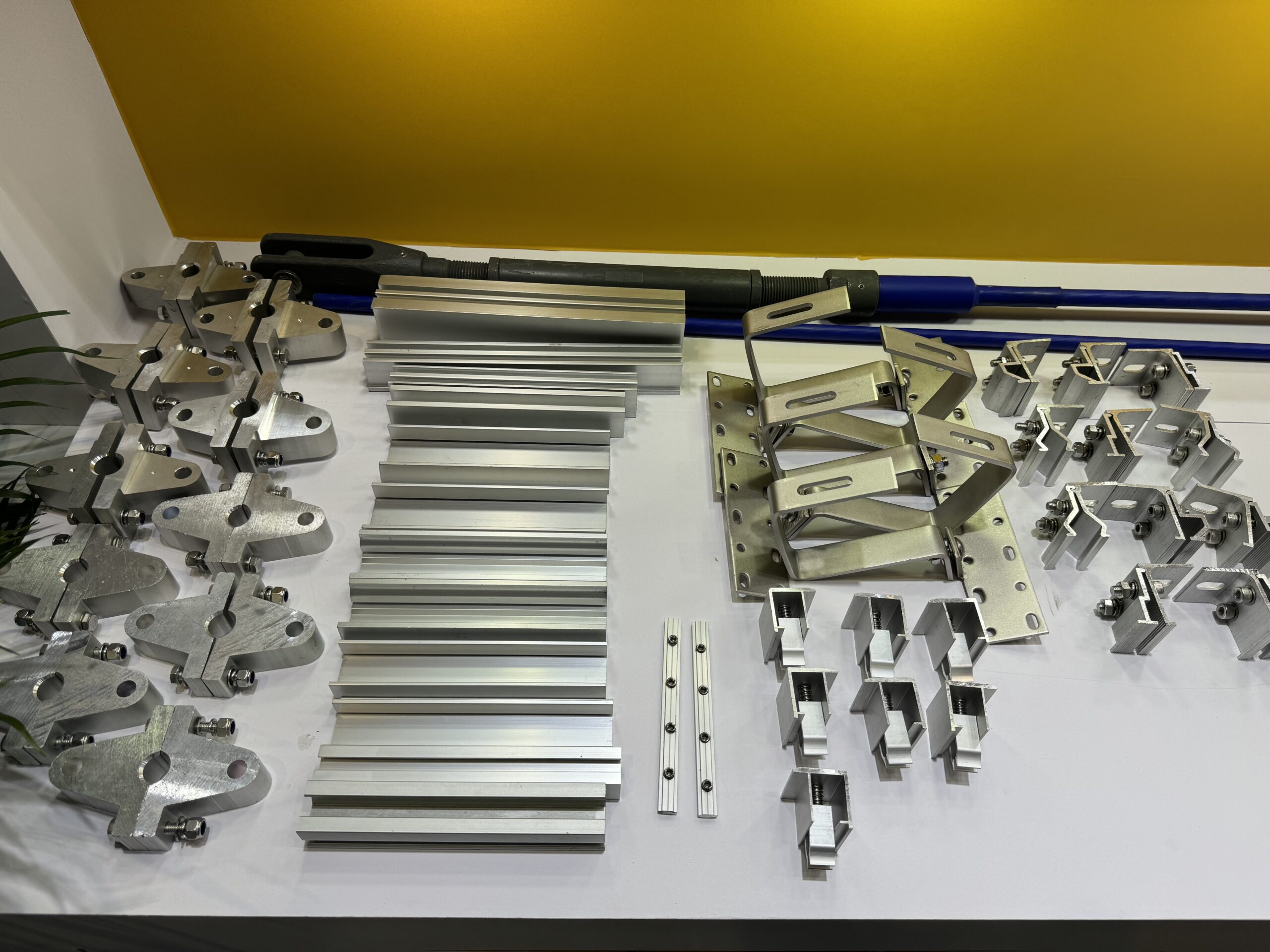
Use copper wire that’s thick enough for the grounding wire; if it’s too thin, high current will burn it out, rendering the connection useless. Copper terminals must be crimped tightly and securely; if they’re loose, contact will be poor, and electricity won’t flow when it should. If grounding screws aren’t made of stainless steel, ordinary screws will rust and break within a few years, causing the grounding to fail. Then there are washers and spring washers—these may look small, but they ensure that once the screws are tightened, they won’t come loose.
Specialized grounding accessories for solar mounting systems are now available as complete sets. They don’t cost much, but they ensure the entire system is connected as a single unit. Where electricity needs to flow, it flows; where grounding is required, it’s secured.
How can you ensure reliable grounding?
Grounding isn’t particularly difficult, but there are a few key points to note:
First, each row of solar mounting brackets must be connected. There must be jumper wires connecting bracket to bracket and rail to rail; you cannot rely on mere “contact” for conductivity. A layer of paint or a bit of rust can break the connection.
Second, the frames of the solar panels must be grounded. Most modern solar panels have aluminum frames. While aluminum is conductive, the points where it contacts the mounting structure are prone to oxidation. It is best to use specialized grounding clamps or connectors to ensure a secure connection between the frame and the mounting structure.
Third, the grounding wire must be connected to a grounding rod. All interconnected racks and modules must ultimately be connected to a dedicated grounding rod using a sufficiently thick copper wire. The grounding rod should be driven deep enough into moist soil to ensure sufficiently low resistance.
Fourth, protect the connections from corrosion. Exposed connections are prone to rusting over time, so it’s best to apply conductive grease or anti-corrosion paint to ensure long-term effectiveness.
Don’t wait until it’s too late to regret it.
I’ve seen many solar power stations where installers cut corners during installation and handled grounding haphazardly. Years later, during inspections, I’ve found grounding wires rusted through, copper terminals loose, and grounding rods dug up—all without anyone noticing.
Such plants may appear to generate power normally, but during thunderstorms or in the event of a line leak, they become ticking time bombs.
Solar grounding components cost next to nothing, but they can save lives when it matters most. For those installing solar systems: don’t skimp on necessary expenses, don’t cut corners on required components, and don’t delay essential inspections.
Safety is something that seems unnecessary until an accident happens—but by then, it’s too late for regrets.
For more professional advice, please click here: Contact Us