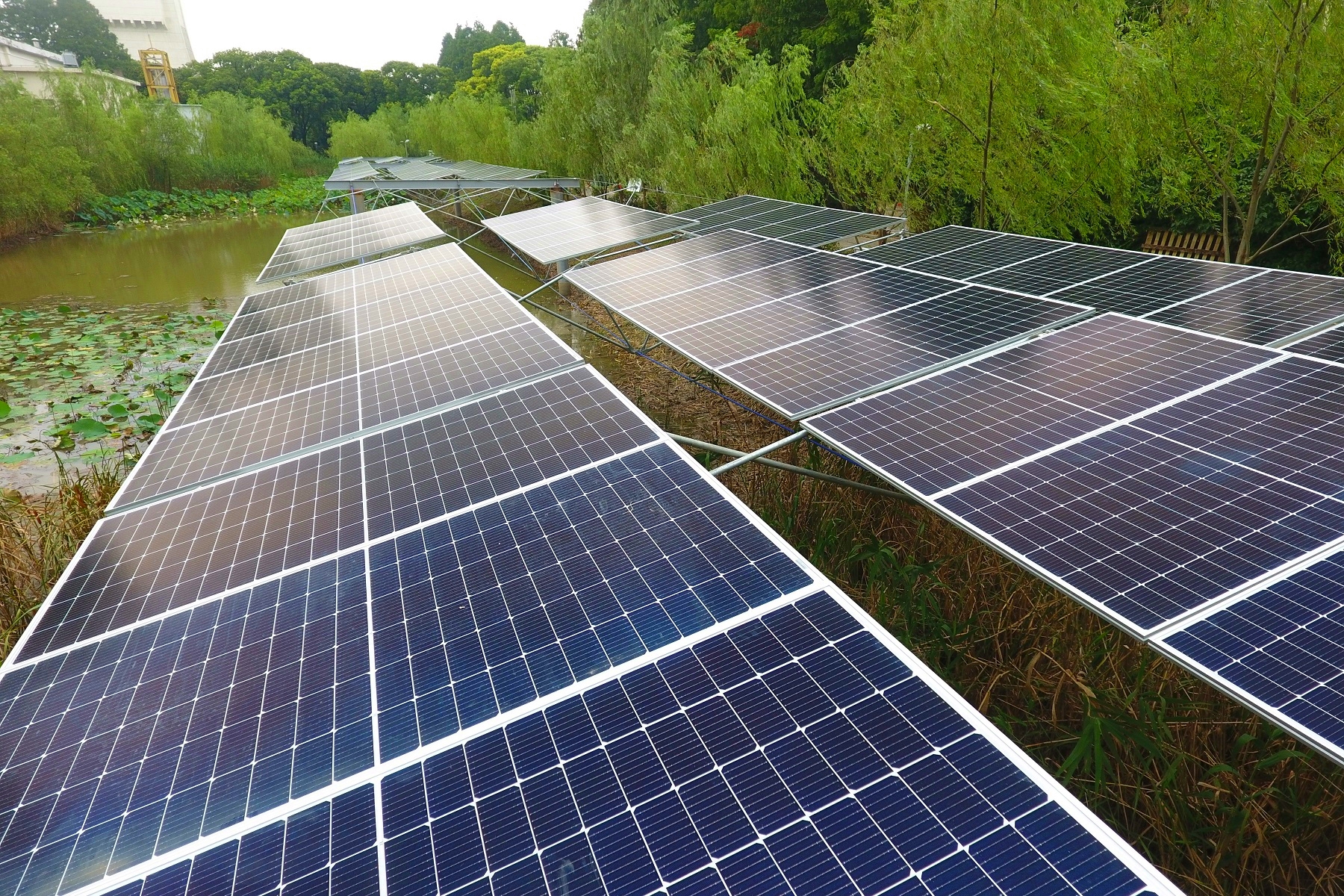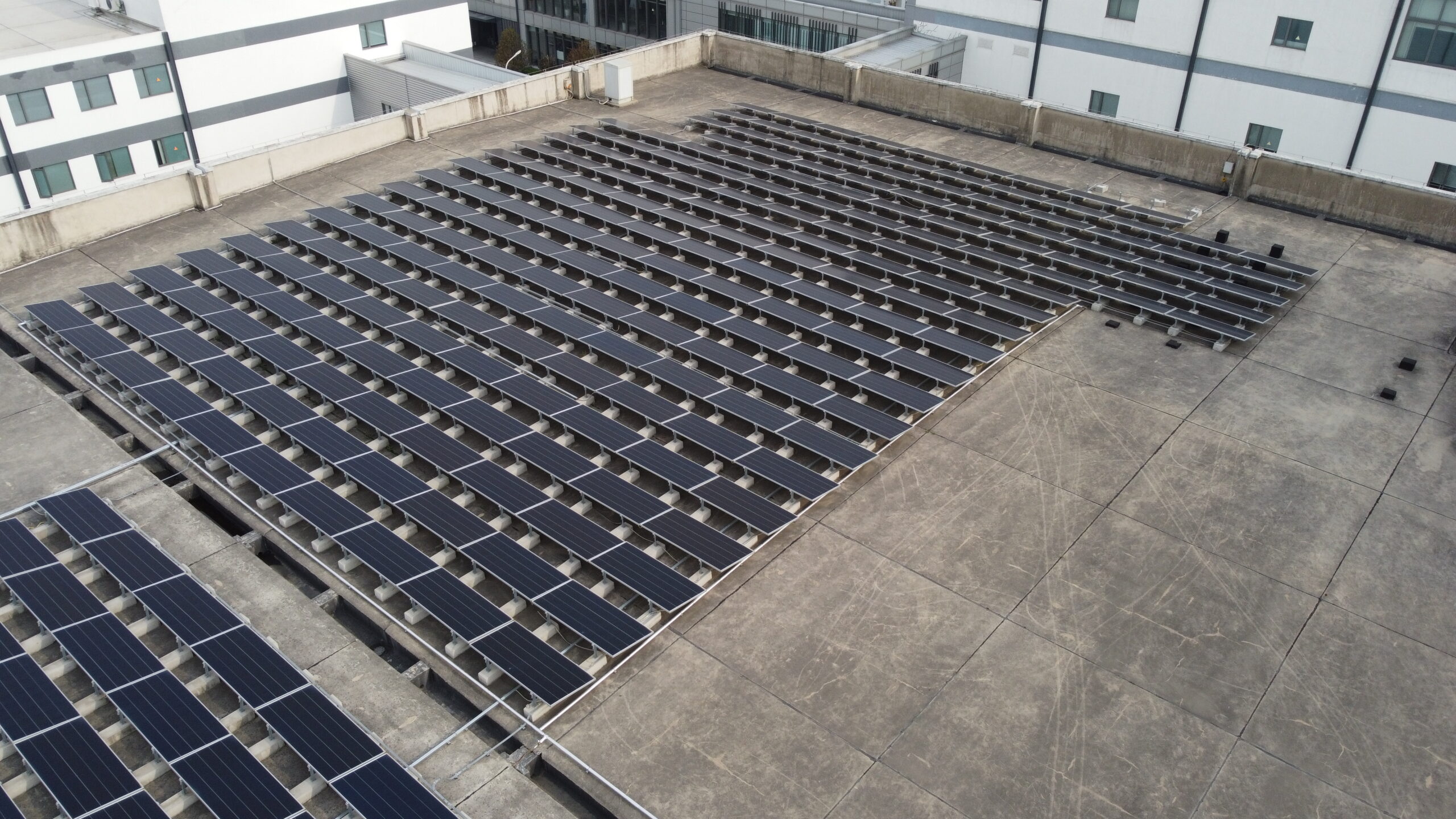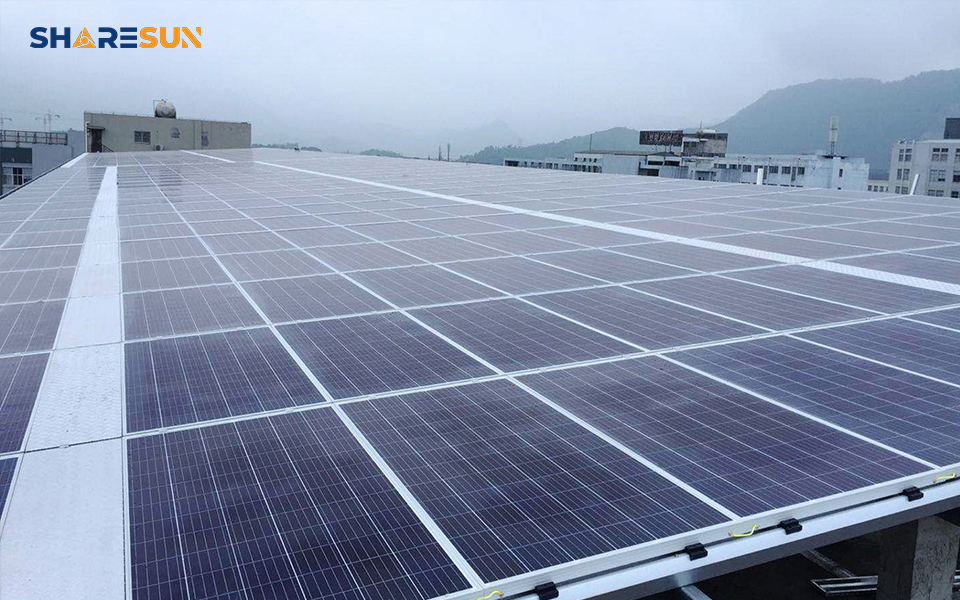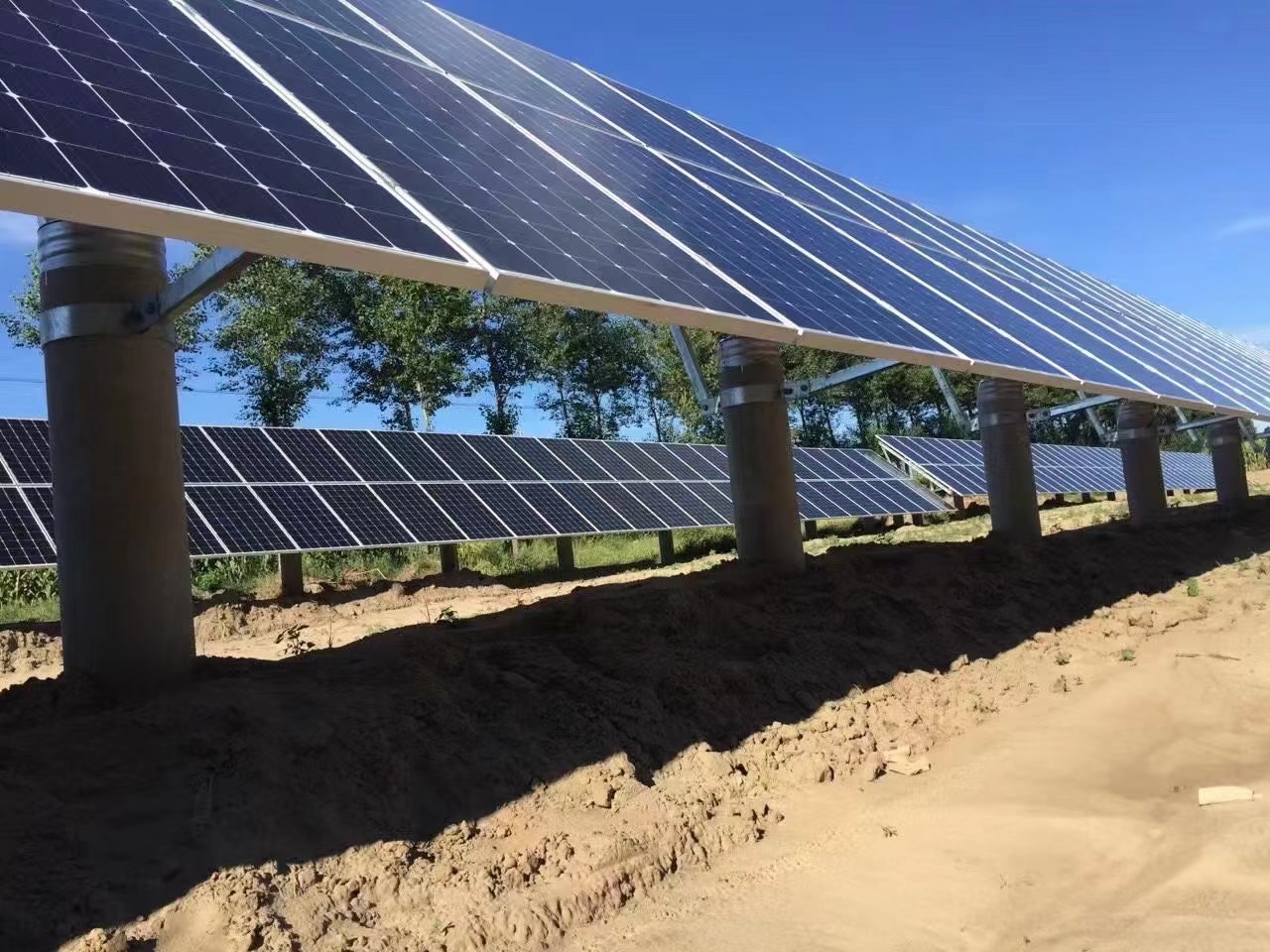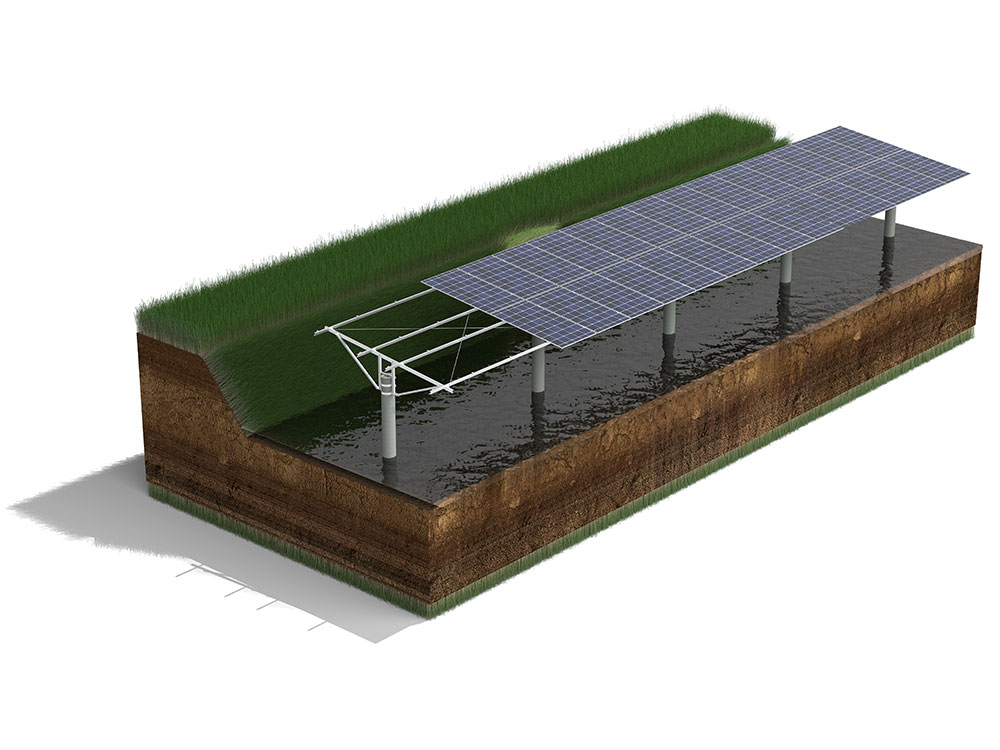
At first glance, a fishery PV mounting system looks similar to a standard ground-mounted solar structure—just placed in a fish pond. But when the quotes arrive, many investors are surprised by the significantly higher cost. So where does the extra expense actually come from? The answer lies in several critical engineering requirements that standard solar installations simply don’t face.
1. Underwater foundation engineering
Unlike driving piles into dry land, installing supports in a fish pond requires detailed geological surveys of the underwater silt layer. Pile length and penetration depth must be calculated precisely to reach the load-bearing layer; otherwise, the modules may tilt over time due to settlement. Precast concrete pipe piles are commonly used, but driving them to sufficient depth in a submerged environment with variable silt thickness demands more expensive equipment and slower, more careful procedures. Furthermore, before construction even begins, the pond water level must be lowered and a separate area reserved for fish relocation. This water management and fish-handling step adds labor, time, and coordination costs that don’t exist in conventional solar projects.
2. Extreme corrosion protection
The area above the water surface is constantly exposed to high humidity and microbial metabolic byproducts—both of which accelerate metal corrosion far more aggressively than dry land conditions. Standard galvanization is insufficient. For fishery PV systems, the hot-dip galvanized coating thickness must be no less than 65 micrometers. Any damage to the coating during welding or cutting requires immediate repair with a zinc-rich coating. Connection bolts must be stainless steel, not ordinary galvanized bolts, which can rust solid within two to three years in such a humid environment. These material and process upgrades significantly increase upfront costs but are essential for a 25-year operational life.
3. Carefully calculated clearance and navigation allowances
The clearance between pile foundations and the water surface must be optimized: too low, and seasonal flooding or water exchange could submerge modules, causing power loss or electrical leakage risks; too high, and steel consumption rises unnecessarily. The minimum standard requires module low points to be at least 0.5 meters above the 50-year flood level. Additionally, unlike ground-mounted solar where space can be fully utilized, fishery PV systems must leave passageways for fishing boats. Pile spacing is typically controlled between 6 and 8 meters to allow small boats to navigate and feed fish. Some projects reduce spacing to install more modules, but that prevents normal fishing and pond cleaning later—a false economy that experienced developers avoid. These spacing constraints reduce power density per unit area, indirectly raising the cost per kilowatt.
4. Precision installation and quality control
Construction sequences are more demanding. Piles must be driven first, then the upper support structure installed—with positioning guides ensuring axial deviation in the same row does not exceed 10 millimeters. After the pile foundation is complete, the surrounding soil must stabilize before vertical posts and diagonal beams are installed. Each post is individually calibrated with a level to ensure overall flatness; otherwise, modules will experience additional stress, increasing the risk of hidden cracks. This precision work slows down installation and requires skilled labor, adding to project costs. (For a more detailed discussion of installation best practices, including underwater foundation treatment, corrosion protection, clearance calculations, cable routing, and coordination with fishing operations, see: [What should be considered when installing Agri-PV Mounting Systems? ])
5. Specialized cable routing and electrical protection
In most fishery PV projects, DC cables run along the support structures and must be properly secured to prevent them from sagging onto the water surface. Cable joints require waterproofing to block moisture intrusion, which degrades insulation over time. Inverters and combiner boxes are recommended to be installed on embankments or elevated areas along the shore—not on the structures themselves—adding distance and cabling costs but reducing long-term moisture damage to expensive electrical equipment.
6. Operational coordination and risk management
Once the mounting structures are installed, clear navigation markers must be placed around the pond embankments. Regular inspections are needed to check for fishing nets entangled around pile foundations and to prevent mechanical collisions during bottom sediment removal. Maintaining good communication with aquaculture farmers is far more effective than dealing with compensation disputes after the fact—but this coordination requires ongoing management effort, which is not a typical line item in conventional solar budgets.
Conclusion
In short, fishery PV mounting systems are not merely “piles driven into water.” The higher cost reflects genuine engineering necessities: underwater foundation treatment, enhanced corrosion protection, optimized clearance and navigation allowances, precision installation, specialized cable routing, and ongoing operational coordination. These requirements ensure that the solar system can coexist with the fish pond for more than 25 years, truly realizing the dual benefits of “generating electricity above and raising fish below.” Cutting corners may reduce the initial quote, but it often leads to structural failure, aquaculture losses, or prohibitive maintenance costs—making the seemingly expensive system, in fact, the only economical choice in the long run.